Generative Plant Art Research
Plant communication and bioimpedance
I make generative art with plants by monitoring plant bioimpedance changes. To understand this more let's explore how plants sense and communicate, and what electricity has to do with it!...
SIGNS OF LIFE
The body of knowledge about the intricacies of plants is in rapid growth so I won’t likely keep up with and cover it all. But I hope, and devote, that my practice will evolve over time to flow into all aspects somehow. There are so many fields of research and aspects to touch upon when working intimately with botanical life.

Plants do not have sensory organs exactly like animals. Yet without a doubt they have ways of perceiving and responding to their environment.
Though rooted and without a nervous system, in the way we traditionally understand them, plants possess intricate internal and exernal communication systems. They utilize systemic signaling, electrical changes, volatile compounds, underground fungal networks and root networks to interact with their environment and each other. They live through complex responses to their environment using sensor cells, electrical conductance and sensing mechanisms.
Flowers, for instance, sense environmental cues to optimize growth and defence. Stomata, which are mouth-like pores on the surface of leaves, crucial for gas exchange, respond to factors like light and humidity, adjusting their openings accordingly in order to thrive. Plants respond and act as a conduits to their environment, photosynthesising, exchanging water and elements across their surface and within them. Human touch can both positively stimulate growth when gentle and cause damage or stress to plants if too harsh.
As botanical life goes about its daily activity, I seek to explore how they live through showing the intricate fluctuations in visual and audio form and how our relationship with them can be better understood through art.
Plants utilise light signaling. They do not “see” in the way we do, as they don’t have eyes per se, however they can detect light wavelengths.
This form of sensing triggers signaling pathways that regulate plant growth, development, and environmental adaptation. They can detect light and respond to it through specialized proteins called photoreceptors.
Their phytochromes detect red and far-red light, which help plants regulate growth, flowering, and germination. While their cryptochromes and phototropins respond to blue light, enabling plants to grow towards light and regulate their circadian rhythms.
Through this intricate mechanism, plants can “sense” light direction, intensity, and duration.
This sensing seeing system embedded within them enables them to coordinate and optimize growth, defend against threats, and adapt to changing environmental conditions.
Plants don’t “smell” in exactly the way we humans do, they don’t have noses, but they do detect and respond to chemical signals in the air, in similar ways to how animals perceive smells.
Plants use volatile organic compounds (VOCs), chemicals released into the air by other plants or organisms, to “sense” their environment. For example when a plant is attacked by herbivores, it can release VOCs that nearby plants detect. These plants may then activate their own defence mechanisms. Plants can also release chemicals to attract pollinators or beneficial insects, or repel pests. Plants can detect airborne chemicals and use them to communicate and adapt to their surroundings.
As far as we know plants do not have emotions like humans, but they have complex hormonal signalling mechanisms to respond to stress and environmental changes.
Hormones are the key messengers in the experience of human emotions. Plants have a complex array of hormones as part of their everyday life. Hormones are chemical messengers that form a network of communication throughout the plant. This hormone network helps plants respond to their environment by fine-tuning their growth and development.
Hormone crosstalk is the communication between different hormone networks. This communication helps plants tailor their responses to different microbes and insects. Plants can send hormone-like messages between their roots and shoots. Roots import hormones, while shoots act as sinks for the hormones. This hormone traffic allows roots to control the morphology and function of shoots.
Hormones like auxins, gibberellins, cytokinins, abscisic acid, and ethylene help plants communicate internally and with neighboring plants. For example, when a plant is stressed by drought or pest attack, it releases hormones such as abscisic acid or jasmonic acid, which can trigger defensive responses both within the plant and in nearby plants. These hormones also help regulate processes like root growth, flowering, and seed germination, allowing plants to adapt to changing conditions and coordinate their survival strategies.
When they release Abscisic acid, it helps them adapt to unfavourable conditions such as cold and dehydration. This hormone, known as a stress hormone, regulates processes like seed maturation, dormancy, stomatal closure to reduce water loss, and disease resistance. and initiation of leaf senescence, when leaves age and eventually fall off. This is vital in allowing plants to move nutrients from their leaves to other parts of the plant, like the seeds, stems, and roots.
Another key hormone is salicylic acid, which regulates plant growth, development, defence responses, and ripening. It strengthens cell walls, produces antimicrobial proteins, and balances plant growth with defence mechanisms, helping plants resist pathogens and respond to environmental stress and abiotic stimuli like salinity. When plants are infected a variety of immune responses are triggered, including cell wall strengthening, the production of antimicrobial substances, and transcriptional reprogramming (altering their gene expression).
Plant hormones play a crucial role in plant communication by regulating growth, development, and responses to environmental stimuli.
Though plants don’t have brains, certain studies suggest they exhibit memory and learning, this is known as plant cognition or plant gnosophysiology
This line of enquiry is essentially exploring where plants may be capable of detecting, responding to and learning from internal and external stimuli in order to choose and make decisions to ensure that they survive and thrive, while somehow retaining that knowledge.
In recent years, experimental evidence for plant cognition has grown and revealed the extent to which plants can use senses and cognition to respond to their environments.
Some researchers have found that plants process information in similar ways as animal nervous systems.
The discovery of a learning-like behavior and memory in plants has been growing since at least the 1960’s, and has been more lately enhanced and popularised by Monica Gagliano, an evolutionary ecologist. Gagliano conducted pioneering studies showing that plants exhibit responses that resemble learning, memory, and even decision-making, concepts traditionally thought to be exclusive to animals.
For instance, repeated dropping of Mimosa pudica (from a low height, so as not to harm it) eventually causes it to stop closing its leaves. Remarkably, the plants retained this learned behavior for weeks, demonstrating a form of “memory” without a brain.
This adaptation seems to indicate that the plant “remembers” that the drop is not harmful. Over time, this response could be seen as plants “learning” from repeated exposure to non-threatening stimuli. This avenue in the study of plant behavior is challenging our understanding of learning in non-neural organisms.
According to anthropologist Jeremy Narby “Plants may not have a brain but they act as a brain”. They use electrical and molecular signals to communicate and learn, some of which are similar to those used by neurons in the human brain.
In Root-brain hypothesis the tip of a plant’s root may function like the brain of some primitive animals. The root cap senses physical properties like gravity, light, and nutrients, and the transition zone between the meristem and the elongation zone may be the plant’s nerve center. Some say that plants produce electrical activity in their vascular tissues, and use signaling molecules like GABA, acetylcholine, and serotonin, which suggests they have the architecture for sentience.
Some orchids are considered to be smart plants because they can outwit other life forms, looking and smelling like insects to trick male bees into landing on them. While this display of evolutionary intelligence is hardwired into their aesthetic and not likely an immediate decision making process it does indicate some kind of intelligent mediation.
Mutually beneficial symbiosis and collaboration is prolifically exampled in nature and does seem an intelligent thing indeed, perhaps our human systems could deeply learn from them.
Plants interact with their environment in ways that seem active or even playful. We are slowly uncovering surprising insights into how plants actively engage with their surroundings.
Some plants exhibit daily dances, where their leaves or flowers move in sync with day-night cycles. For instance, legumes like beans and sunflowers are known to track the sun’s path, an action called heliotropism.
Sunflowers famously follow the sun during the day, turning their heads from east to west, a motion that resembles a dance with light. These circadian rhythms are part of their everyday life. Prayer plants fold up at night, as do most flowers, aligning their rhythms with the waking hours of their pollinators, saving their energy, and pollen, and protecting themselves.
Some plants display a circular movement called nutation, where their stems sway or spiral, likely to explore their surroundings for optimal growth direction. Charles Darwin first observed this “circumnutation” in plants like climbing beans, which appear to search for support structures to cling to by making these sweeping, exploratory movements.
Plants display play-like interactions with symbiotic partners and communicate chemically with other plants. Some plants engage in playful-seeming “pollinator dances,” like moving or altering their colors and scents to attract specific pollinators, almost like an invitation to play in their nectar-filled gardens.
Some plants appear to dance in response to musical or rhythmic sounds. While the mechanism is not fully understood, experiments have observed that certain species might grow faster or orient themselves differently in the presence of specific sound frequencies, almost as if they’re responding to music. These experiments provide intriguing evidence that plants might respond to sound, possibly through vibrational changes at the cellular level. The research suggests a kind of dancing or growth response.
These behaviors illustrate how plants are far from passive entities; they actively engage with and adapt to their environment. They play with light, water, and other stimuli in their surroundings in ways that suggest intelligence and responsiveness, though different from and often much slower than animals, it’s dynamic and interactive.
Plants support one another through various communication and resource-sharing mechanisms that enhance their survival and growth. These interactions occur both above and below ground and include chemical signaling, nutrient sharing, and mutual defense.
As mentioned before, one key method of communication is through volatile organic compounds (VOCs), which plants release into the air. These compounds can warn neighboring plants of attacks, prompting them to produce defensive chemicals, or attract pollinators, which also benefits nearby plants.
This response can be sensed as coordinated, with plants changing color or releasing scents in unison.
Underground, many plants connect through mycorrhizal networks allowing them to exchange essential nutrients like nitrogen and carbon. These networks also transmit distress signals when a plant experiences stress, enabling others to prepare defenses.
Physical protection is another way plants help each other. Taller plants provide shade to smaller ones, protecting them from excessive sunlight and reducing water evaporation, while large plants can act as windbreaks, shielding delicate species. In some cases, plants engage in positive allelopathy, releasing chemicals that promote the growth of nearby plants by enhancing nutrient availability or suppressing harmful microbes.
Mutual defense is also common, with certain plants attracting pests away from crops or companion plants like basil repelling insects from neighboring tomatoes.
In drought-prone environments, plants connected via fungal networks can share water, while in forests, trees sometimes graft their roots together to share resources directly. As discussed before, there are also mother trees or hub trees which look after and safeguard younger trees.
In harsh environments like deserts, “nurse plants” create microclimates that offer shade and moisture retention, facilitating the growth of smaller, more vulnerable species.
Plants are collaborate in their nature, creating resilient ecosystems. They demonstrate deep cooperation in the natural world.
Forest ecologist Suzanne Simard discovered that trees communicate with each other through a network of fungi called the Wood Wide Web.
Beneath every forest and wood there is a complex underground web of roots, fungi and bacteria helping to connect trees and plants to one another. This subterranean mycorrhizal social network is nearly 500 million years old. She also identified the largest trees in a forest as the “mother trees” or “hub trees”, which play a central role in the forest’s networked ecosystem.
Mother trees infect seedlings with fungi, which provides the nutrients they need to grow. They also pass nutrients, carbon, and water to seedlings at crucial times in their lives.
Fungal networks connect plant roots, facilitating the exchange of nutrients, water, and signals to coordinate growth and environmental responses. Many plants form symbiotic relationships with fungi known as mycorrhizae. Plants can then exchange nutrients like nitrogen, phosphorus, and carbon. For example, a plant that is getting more sunlight may share excess sugars with a plant in the shade, while the shaded plant might offer minerals it absorbs better.
In terms of signal stress, if a plant is stressed by drought, pests, or disease, it can send chemical signals through the mycorrhizal network to neighbouring plants. This can trigger defensive responses in the other plants before they are affected.
In a forest, everything is connected.
Plants have a significant impact on local and global water cycles and climate. Plants release water vapor through transpiration, which helps regulate humidity levels and influence cloud formation and precipitation patterns.
By absorbing CO₂, plants contribute to reducing atmospheric temperatures. Tropical rainforests and boreal forests, for instance, play an essential role in stabilizing global temperatures.
Plants form symbiotic relationships with microbes, which can impact plant health, growth, and resilience. Nitrogen fixation by plants enriches the soil, benefiting both the plants and surrounding crops.
Legumes, for instance, form partnerships with nitrogen-fixing bacteria, which convert atmospheric nitrogen into a usable form.
Beneficial bacteria and fungi, known as endophytes, live within plants and enhance their ability to resist disease, withstand pathogens and environmental stressors.
Plants don’t “hear” the way we do, but research suggests that plants detect vibrations in their environment, including sound waves, and respond to them, even reacting to specific sound frequencies.
For instance root growth has been observed to respond to sound, helping plants seek out water sources. Some plants have been found to react to the vibrations caused by insect chewing by increasing their production of chemical defences.
Some research suggests stoma, the tiny mouth-like pores on leaves, can be stimulated to open by birdsong. Thinking of the cacophonous chorus of birds just before daybreak it makes one wonder if this is readying the leaves to feed on the coming sun.
Some studies also show that their flowers can act like ears, listening for pollinators and ramping up pollen release as a result.
Research into the effects of music and sound on plant growth has been conducted by several scientists and researchers, with early studies dating back to the 1960s and 1970s. One of the first to explore this topic was Dorothy Retallack, who conducted experiments at the Colorado Women’s College (now part of the University of Denver) in the early 1970s. Retallack observed that plants exposed to certain types of music, particularly classical or soothing sounds, seemed to grow better than plants exposed to rock music or silence. Her work suggested that plants might respond positively to certain sound frequencies, a phenomenon she described in her book The Sound of Music and Plants (1973).
More recently, researchers have continued to investigate how sound frequencies affect plant growth, though findings remain mixed and mechanisms are still not fully understood. Some studies indicate that certain plants show improved growth, root development, or even orientation changes when exposed to specific frequencies. For instance:
South Korean scientists have experimented with playing classical music for rice plants and observed improved growth and gene expression linked to stress tolerance.
Other studies have shown that sound frequencies in the range of 200-300 Hz might stimulate growth and nutrient absorption in some species.
Research has shown that birdsong, along with other sound vibrations, can impact the behavior of plant stomata, which are microscopic pores essential for gas exchange and photosynthesis.
Studies at the University of San Diego observed that plants exposed to acoustic vibrations, like birdsong or soft music, may experience enhanced stomatal opening, which can improve the intake of carbon dioxide and water flow, benefiting plant growth and nutrient absorption. This suggests that birdsong could function similarly to an “acoustic fertilizer” for plants, aiding their physiological processes and potentially fostering faster growth in various species, from flowering plants to succulents
While plants lack traditional hearing structures, they can still “sense” these vibrations through mechanoreceptors, proteins in cell membranes that convert sound into biochemical signals. This discovery supports the broader field of plant bioacoustics, which investigates how sound frequencies, including birdsong, might activate growth-related genetic expressions or influence cellular functions like cytoplasmic streaming.
It has been found that plants produce sounds. Although generally considered inaudible to humans without the aid of special equipment, these popping and clicking noises often occur during the movement of water and air within the plant tissues or as a response to environmental stress.
One common reason is cavitation, where bubbles form in the water-conducting tissues (xylem) during the movement of water. When these bubbles collapse or “pop,” they produce clicking sounds. This usually happens when plants are under drought stress and water movement becomes disrupted.
As plants grow and cells expand, internal pressure changes can sometimes lead to tiny sounds like popping or clicking, especially in fast-growing plants.
Some plants, particularly those with specialized structures like seed pods, may make noises as part of their natural reproductive processes. For instance, certain seed pods burst open with a pop to disperse seeds when they dry out.
Some research suggests that plants might produce subtle sounds in response to injury or herbivore attacks, possibly as a form of communication or defense mechanism. These sounds are part of the plant’s signaling response to stress.
Although their sounds are usually too faint for human ears, they are being detected and studied using sensitive microphones or ultrasonic recording equipment.
Plants don’t have a nervous system like we do. Though much less specialized than neuronal signaling, they do have inbuilt electrophysiological communication systems.
They, like us, also rely on a rich repertoire of hormonal signals to mediate their existence within their wider ecosystem.
Plants maintain a small negative charge, increasing with height, creating an electric field around structures like flowers. Flowers sense environmental cues such as light, temperature, and humidity, adjusting growth and defence mechanisms accordingly. Internally, they transmit signals via electrical impulses, enabling rapid responses to injury or environmental changes.
Rapid changes in electrical potentials within a plant propagate signals, such as when a plant is wounded, activating responses in other areas. Similar to nerves in animals, plants use electrical impulses to transmit signals internally, helping them respond quickly to changes like injury or environmental stress.
Plants use electricity mainly through ion-based electrical signals, to communicate internally and respond to environmental stimuli. Methods through which they do this include action potentials (APs), variation potentials (VPs), local electric potentials (LEPs), and systemic potentials (SPs). Action potentials, similar to nerve impulses, enable rapid communication in response to stimuli like touch or injury, while variation potentials are slower, often triggered by damage such as herbivory.
These electrical signals regulate various plant functions, including rapid movements in plants like the Venus flytrap, which snaps shut when triggered by prey, and Mimosa pudica, which folds its leaves upon touch. Electrical signals also activate defence mechanisms when a plant is wounded, prompting the release of protective hormones or reinforcing cell walls.
Plants utilize electrical signals to regulate growth, such as root development and responses to gravity, and to adapt to environmental changes like light or water availability by controlling stomatal opening and closing. Some research suggests that these signals may even contribute to plant-to-plant communication, where electrical impulses from a stressed plant trigger chemical signals to warn neighbouring plants of potential threats. Overall, electricity allows plants to efficiently respond to their surroundings and regulate vital functions.
Electrophysiological ions bind to receptors on the receiving cell causing downstream effects result from one or a combination of molecules present. This means of transferring information and activating physiological responses via a signaling molecule system has been found to be faster and more frequent in the presence of APs. These action potentials can influence processes such as actin-based cytoplasmic streaming, plant organ movements, wound responses, respiration, photosynthesis, and flowering. These electrical responses can cause the synthesis of numerous organic molecules, including ones that act as neuroactive substances in other organisms such as calcium ions.
The ion flux across cells also influence the movement of other molecules and solutes. This changes the osmotic gradient of the cell, resulting in changes to turgor pressure in plant cells by water and solute flux across cell membranes. These variations are vital for nutrient uptake, growth, many types of movements (tropisms and nastic movements) among other basic plant physiology and behavior. Thus, plants achieve behavioural responses in environmental, communicative, and ecological contexts mediated by their electrophysiological existence.
In summary they are electrical beings.
Electrical impedance is the measure of the total opposition that a circuit or system presents to electric current. Impedance includes both resistance and reactance.
The electrical impedance of a leaf is influenced by several key factors, including its structure, water content, ion concentration, and environmental conditions. Different regions of a leaf, such as the mesophyll and epidermis, show varied impedance due to differences in cellular arrangement and density.
Stomatal density and vascular bundles (xylem and phloem) also affect impedance by regulating water vapor and ion flow. Hydration plays a crucial role, as well-hydrated areas have lower impedance due to higher ionic conductivity, while dry areas exhibit higher impedance. Similarly, regions with high ion concentrations, especially potassium or calcium, show lower impedance due to enhanced ionic movement.
Environmental factors such as light, temperature, and humidity further impact electrical impedance by altering photosynthesis, transpiration, and metabolic processes. For instance, sunlit areas of a leaf exhibit different impedance compared to shaded regions, and higher temperatures can increase metabolic activity, influencing ionic movement. Physical damage or disease disrupts cellular integrity, leading to altered water and ion flow, which raises impedance.
Stomatal behavior also plays a key role in regulating electrical properties like impedance and capacitance. Guard cells control the opening and closing of stomata, affecting ion transport and water vapor levels, which in turn impact the electrical potential across the leaf.
Electrode placement and measurement frequency can influence impedance readings, with low frequencies capturing overall leaf properties and high frequencies providing more detailed information about cellular structures. Understanding these factors provides insights into plant health, physiology, and response to environmental changes.
Human touch can have both positive and negative effects on plants.
Positive effects include pruning, where regular trimming removes damaged parts and promotes new, healthy growth. Stimulation where gentle touch stimulates growth hormones, helping plants grow stronger and taller. Connection where some research suggests human touch fosters a caregiver-plant connection, leading to healthier plants.
Negative effects includes damage where rough handling can bruise plants, reducing vitality and increasing susceptibility to disease. Contamination, where hands may transfer harmful bacteria or fungi to plants. Also unwanted touch can stress plants, stunting growth and reducing health.
How we touch and interact with plants matters and changes the nature of our relationship to them and their experience of us.
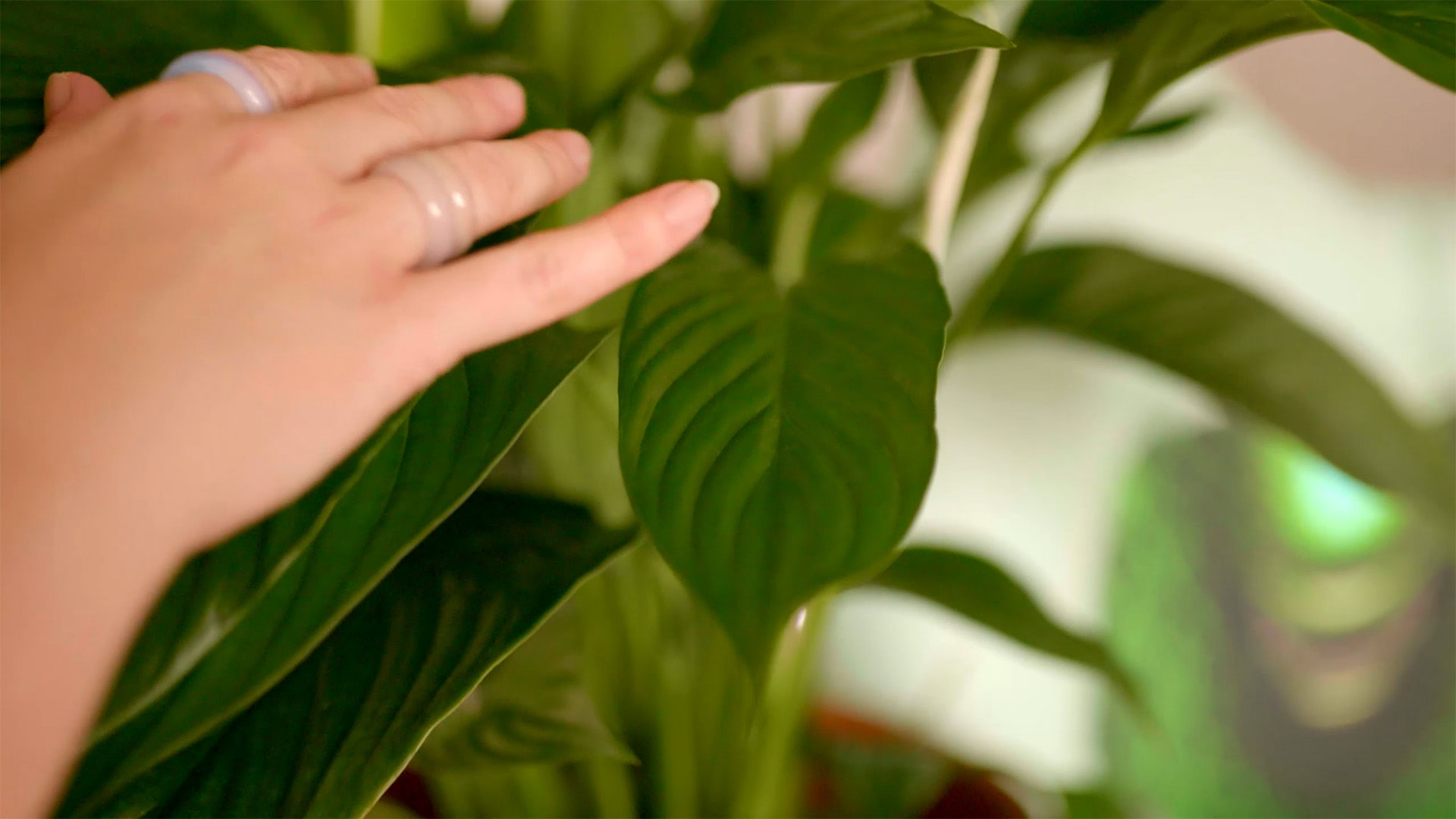
When a human touches a plant, it can affect the plant’s electrical signaling by altering the flow of ions within its tissues. This interaction occurs because both the human body and plants have electrical properties that influence each other.
Human touch can trigger action potentials, similar to nerve impulses in animals, by causing ion movements across plant cell membranes, which generate electrical currents.
Additionally, the electrical impedance, or resistance to electrical flow, in plant tissues can change due to the presence of ions in human skin and the mechanical pressure applied during touch. This can slow or weaken electrical signals within the plant or, in some cases, make them more efficient. These changes may lead to secondary responses such as stomatal closure, defensive chemical releases, or physical movements like leaf folding in sensitive plants like Mimosa pudica.
Thus, human touch can influence the way electricity flows through plants, altering their signaling and physiological responses.
Plants do not have sensory organs exactly like animals. Yet without a doubt they have ways of perceiving and responding to their environment.
Though rooted and without a nervous system, in the way we traditionally understand them, plants possess intricate internal and exernal communication systems. They utilize systemic signaling, electrical changes, volatile compounds, underground fungal networks and root networks to interact with their environment and each other. They live through complex responses to their environment using sensor cells, electrical conductance and sensing mechanisms.
Flowers, for instance, sense environmental cues to optimize growth and defence. Stomata, which are mouth-like pores on the surface of leaves, crucial for gas exchange, respond to factors like light and humidity, adjusting their openings accordingly in order to thrive. Plants respond and act as a conduits to their environment, photosynthesising, exchanging water and elements across their surface and within them. Human touch can both positively stimulate growth when gentle and cause damage or stress to plants if too harsh.
As botanical life goes about its daily activity, I seek to explore how they live through showing the intricate fluctuations in visual and audio form and how our relationship with them can be better understood through art.
Plants utilise light signaling. They do not “see” in the way we do, as they don’t have eyes per se, however they can detect light wavelengths.
This form of sensing triggers signaling pathways that regulate plant growth, development, and environmental adaptation. They can detect light and respond to it through specialized proteins called photoreceptors.
Their phytochromes detect red and far-red light, which help plants regulate growth, flowering, and germination. While their cryptochromes and phototropins respond to blue light, enabling plants to grow towards light and regulate their circadian rhythms.
Through this intricate mechanism, plants can “sense” light direction, intensity, and duration.
This sensing seeing system embedded within them enables them to coordinate and optimize growth, defend against threats, and adapt to changing environmental conditions.
Plants don’t “smell” in exactly the way we humans do, they don’t have noses, but they do detect and respond to chemical signals in the air, in similar ways to how animals perceive smells.
Plants use volatile organic compounds (VOCs), chemicals released into the air by other plants or organisms, to “sense” their environment. For example when a plant is attacked by herbivores, it can release VOCs that nearby plants detect. These plants may then activate their own defence mechanisms. Plants can also release chemicals to attract pollinators or beneficial insects, or repel pests. Plants can detect airborne chemicals and use them to communicate and adapt to their surroundings.
As far as we know plants do not have emotions like humans, but they have complex hormonal signalling mechanisms to respond to stress and environmental changes.
Hormones are the key messengers in the experience of human emotions. Plants have a complex array of hormones as part of their everyday life. Hormones are chemical messengers that form a network of communication throughout the plant. This hormone network helps plants respond to their environment by fine-tuning their growth and development.
Hormone crosstalk is the communication between different hormone networks. This communication helps plants tailor their responses to different microbes and insects. Plants can send hormone-like messages between their roots and shoots. Roots import hormones, while shoots act as sinks for the hormones. This hormone traffic allows roots to control the morphology and function of shoots.
Hormones like auxins, gibberellins, cytokinins, abscisic acid, and ethylene help plants communicate internally and with neighboring plants. For example, when a plant is stressed by drought or pest attack, it releases hormones such as abscisic acid or jasmonic acid, which can trigger defensive responses both within the plant and in nearby plants. These hormones also help regulate processes like root growth, flowering, and seed germination, allowing plants to adapt to changing conditions and coordinate their survival strategies.
When they release Abscisic acid, it helps them adapt to unfavourable conditions such as cold and dehydration. This hormone, known as a stress hormone, regulates processes like seed maturation, dormancy, stomatal closure to reduce water loss, and disease resistance. and initiation of leaf senescence, when leaves age and eventually fall off. This is vital in allowing plants to move nutrients from their leaves to other parts of the plant, like the seeds, stems, and roots.
Another key hormone is salicylic acid, which regulates plant growth, development, defence responses, and ripening. It strengthens cell walls, produces antimicrobial proteins, and balances plant growth with defence mechanisms, helping plants resist pathogens and respond to environmental stress and abiotic stimuli like salinity. When plants are infected a variety of immune responses are triggered, including cell wall strengthening, the production of antimicrobial substances, and transcriptional reprogramming (altering their gene expression).
Plant hormones play a crucial role in plant communication by regulating growth, development, and responses to environmental stimuli.
Though plants don’t have brains, certain studies suggest they exhibit memory and learning, this is known as plant cognition or plant gnosophysiology
This line of enquiry is essentially exploring where plants may be capable of detecting, responding to and learning from internal and external stimuli in order to choose and make decisions to ensure that they survive and thrive, while somehow retaining that knowledge.
In recent years, experimental evidence for plant cognition has grown and revealed the extent to which plants can use senses and cognition to respond to their environments.
Some researchers have found that plants process information in similar ways as animal nervous systems.
The discovery of a learning-like behavior and memory in plants has been growing since at least the 1960’s, and has been more lately enhanced and popularised by Monica Gagliano, an evolutionary ecologist. Gagliano conducted pioneering studies showing that plants exhibit responses that resemble learning, memory, and even decision-making, concepts traditionally thought to be exclusive to animals.
For instance, repeated dropping of Mimosa pudica (from a low height, so as not to harm it) eventually causes it to stop closing its leaves. Remarkably, the plants retained this learned behavior for weeks, demonstrating a form of “memory” without a brain.
This adaptation seems to indicate that the plant “remembers” that the drop is not harmful. Over time, this response could be seen as plants “learning” from repeated exposure to non-threatening stimuli. This avenue in the study of plant behavior is challenging our understanding of learning in non-neural organisms.
According to anthropologist Jeremy Narby “Plants may not have a brain but they act as a brain”. They use electrical and molecular signals to communicate and learn, some of which are similar to those used by neurons in the human brain.
In Root-brain hypothesis the tip of a plant’s root may function like the brain of some primitive animals. The root cap senses physical properties like gravity, light, and nutrients, and the transition zone between the meristem and the elongation zone may be the plant’s nerve center. Some say that plants produce electrical activity in their vascular tissues, and use signaling molecules like GABA, acetylcholine, and serotonin, which suggests they have the architecture for sentience.
Some orchids are considered to be smart plants because they can outwit other life forms, looking and smelling like insects to trick male bees into landing on them. While this display of evolutionary intelligence is hardwired into their aesthetic and not likely an immediate decision making process it does indicate some kind of intelligent mediation.
Mutually beneficial symbiosis and collaboration is prolifically exampled in nature and does seem an intelligent thing indeed, perhaps our human systems could deeply learn from them.
Plants interact with their environment in ways that seem active or even playful. We are slowly uncovering surprising insights into how plants actively engage with their surroundings.
Some plants exhibit daily dances, where their leaves or flowers move in sync with day-night cycles. For instance, legumes like beans and sunflowers are known to track the sun’s path, an action called heliotropism.
Sunflowers famously follow the sun during the day, turning their heads from east to west, a motion that resembles a dance with light. These circadian rhythms are part of their everyday life. Prayer plants fold up at night, as do most flowers, aligning their rhythms with the waking hours of their pollinators, saving their energy, and pollen, and protecting themselves.
Some plants display a circular movement called nutation, where their stems sway or spiral, likely to explore their surroundings for optimal growth direction. Charles Darwin first observed this “circumnutation” in plants like climbing beans, which appear to search for support structures to cling to by making these sweeping, exploratory movements.
Plants display play-like interactions with symbiotic partners and communicate chemically with other plants. Some plants engage in playful-seeming “pollinator dances,” like moving or altering their colors and scents to attract specific pollinators, almost like an invitation to play in their nectar-filled gardens.
Some plants appear to dance in response to musical or rhythmic sounds. While the mechanism is not fully understood, experiments have observed that certain species might grow faster or orient themselves differently in the presence of specific sound frequencies, almost as if they’re responding to music. These experiments provide intriguing evidence that plants might respond to sound, possibly through vibrational changes at the cellular level. The research suggests a kind of dancing or growth response.
These behaviors illustrate how plants are far from passive entities; they actively engage with and adapt to their environment. They play with light, water, and other stimuli in their surroundings in ways that suggest intelligence and responsiveness, though different from and often much slower than animals, it’s dynamic and interactive.
Plants support one another through various communication and resource-sharing mechanisms that enhance their survival and growth. These interactions occur both above and below ground and include chemical signaling, nutrient sharing, and mutual defense.
As mentioned before, one key method of communication is through volatile organic compounds (VOCs), which plants release into the air. These compounds can warn neighboring plants of attacks, prompting them to produce defensive chemicals, or attract pollinators, which also benefits nearby plants.
This response can be sensed as coordinated, with plants changing color or releasing scents in unison.
Underground, many plants connect through mycorrhizal networks allowing them to exchange essential nutrients like nitrogen and carbon. These networks also transmit distress signals when a plant experiences stress, enabling others to prepare defenses.
Physical protection is another way plants help each other. Taller plants provide shade to smaller ones, protecting them from excessive sunlight and reducing water evaporation, while large plants can act as windbreaks, shielding delicate species. In some cases, plants engage in positive allelopathy, releasing chemicals that promote the growth of nearby plants by enhancing nutrient availability or suppressing harmful microbes.
Mutual defense is also common, with certain plants attracting pests away from crops or companion plants like basil repelling insects from neighboring tomatoes.
In drought-prone environments, plants connected via fungal networks can share water, while in forests, trees sometimes graft their roots together to share resources directly. As discussed before, there are also mother trees or hub trees which look after and safeguard younger trees.
In harsh environments like deserts, “nurse plants” create microclimates that offer shade and moisture retention, facilitating the growth of smaller, more vulnerable species.
Plants are collaborate in their nature, creating resilient ecosystems. They demonstrate deep cooperation in the natural world.
Forest ecologist Suzanne Simard discovered that trees communicate with each other through a network of fungi called the Wood Wide Web.
Beneath every forest and wood there is a complex underground web of roots, fungi and bacteria helping to connect trees and plants to one another. This subterranean mycorrhizal social network is nearly 500 million years old. She also identified the largest trees in a forest as the “mother trees” or “hub trees”, which play a central role in the forest’s networked ecosystem.
Mother trees infect seedlings with fungi, which provides the nutrients they need to grow. They also pass nutrients, carbon, and water to seedlings at crucial times in their lives.
Fungal networks connect plant roots, facilitating the exchange of nutrients, water, and signals to coordinate growth and environmental responses. Many plants form symbiotic relationships with fungi known as mycorrhizae. Plants can then exchange nutrients like nitrogen, phosphorus, and carbon. For example, a plant that is getting more sunlight may share excess sugars with a plant in the shade, while the shaded plant might offer minerals it absorbs better.
In terms of signal stress, if a plant is stressed by drought, pests, or disease, it can send chemical signals through the mycorrhizal network to neighbouring plants. This can trigger defensive responses in the other plants before they are affected.
In a forest, everything is connected.
Plants have a significant impact on local and global water cycles and climate. Plants release water vapor through transpiration, which helps regulate humidity levels and influence cloud formation and precipitation patterns.
By absorbing CO₂, plants contribute to reducing atmospheric temperatures. Tropical rainforests and boreal forests, for instance, play an essential role in stabilizing global temperatures.
Plants form symbiotic relationships with microbes, which can impact plant health, growth, and resilience. Nitrogen fixation by plants enriches the soil, benefiting both the plants and surrounding crops.
Legumes, for instance, form partnerships with nitrogen-fixing bacteria, which convert atmospheric nitrogen into a usable form. Beneficial bacteria and fungi, known as endophytes, live within plants and enhance their ability to resist disease, withstand pathogens and environmental stressors.
Plants don’t “hear” the way we do, but research suggests that plants detect vibrations in their environment, including sound waves, and respond to them, even reacting to specific sound frequencies.
For instance root growth has been observed to respond to sound, helping plants seek out water sources. Some plants have been found to react to the vibrations caused by insect chewing by increasing their production of chemical defences.
Some research suggests stoma, the tiny mouth-like pores on leaves, can be stimulated to open by birdsong. Thinking of the cacophonous chorus of birds just before daybreak it makes one wonder if this is readying the leaves to feed on the coming sun.
Some studies also show that their flowers can act like ears, listening for pollinators and ramping up pollen release as a result.
Research into the effects of music and sound on plant growth has been conducted by several scientists and researchers, with early studies dating back to the 1960s and 1970s. One of the first to explore this topic was Dorothy Retallack, who conducted experiments at the Colorado Women’s College (now part of the University of Denver) in the early 1970s. Retallack observed that plants exposed to certain types of music, particularly classical or soothing sounds, seemed to grow better than plants exposed to rock music or silence. Her work suggested that plants might respond positively to certain sound frequencies, a phenomenon she described in her book The Sound of Music and Plants (1973).
More recently, researchers have continued to investigate how sound frequencies affect plant growth, though findings remain mixed and mechanisms are still not fully understood. Some studies indicate that certain plants show improved growth, root development, or even orientation changes when exposed to specific frequencies. For instance:
South Korean scientists have experimented with playing classical music for rice plants and observed improved growth and gene expression linked to stress tolerance.
Other studies have shown that sound frequencies in the range of 200-300 Hz might stimulate growth and nutrient absorption in some species.
Research has shown that birdsong, along with other sound vibrations, can impact the behavior of plant stomata, which are microscopic pores essential for gas exchange and photosynthesis.
Studies at the University of San Diego observed that plants exposed to acoustic vibrations, like birdsong or soft music, may experience enhanced stomatal opening, which can improve the intake of carbon dioxide and water flow, benefiting plant growth and nutrient absorption. This suggests that birdsong could function similarly to an “acoustic fertilizer” for plants, aiding their physiological processes and potentially fostering faster growth in various species, from flowering plants to succulents
While plants lack traditional hearing structures, they can still “sense” these vibrations through mechanoreceptors, proteins in cell membranes that convert sound into biochemical signals. This discovery supports the broader field of plant bioacoustics, which investigates how sound frequencies, including birdsong, might activate growth-related genetic expressions or influence cellular functions like cytoplasmic streaming.
It has been found that plants produce sounds. Although generally considered inaudible to humans without the aid of special equipment, these popping and clicking noises often occur during the movement of water and air within the plant tissues or as a response to environmental stress.
One common reason is cavitation, where bubbles form in the water-conducting tissues (xylem) during the movement of water. When these bubbles collapse or “pop,” they produce clicking sounds. This usually happens when plants are under drought stress and water movement becomes disrupted.
As plants grow and cells expand, internal pressure changes can sometimes lead to tiny sounds like popping or clicking, especially in fast-growing plants.
Some plants, particularly those with specialized structures like seed pods, may make noises as part of their natural reproductive processes. For instance, certain seed pods burst open with a pop to disperse seeds when they dry out.
Some research suggests that plants might produce subtle sounds in response to injury or herbivore attacks, possibly as a form of communication or defense mechanism. These sounds are part of the plant’s signaling response to stress.
Although their sounds are usually too faint for human ears, they are being detected and studied using sensitive microphones or ultrasonic recording equipment.
Plants don’t have a nervous system like we do. Though much less specialized than neuronal signaling, they do have inbuilt electrophysiological communication systems.
They, like us, also rely on a rich repertoire of hormonal signals to mediate their existence within their wider ecosystem.
Plants maintain a small negative charge, increasing with height, creating an electric field around structures like flowers. Flowers sense environmental cues such as light, temperature, and humidity, adjusting growth and defence mechanisms accordingly. Internally, they transmit signals via electrical impulses, enabling rapid responses to injury or environmental changes.
Rapid changes in electrical potentials within a plant propagate signals, such as when a plant is wounded, activating responses in other areas. Similar to nerves in animals, plants use electrical impulses to transmit signals internally, helping them respond quickly to changes like injury or environmental stress.
Plants use electricity mainly through ion-based electrical signals, to communicate internally and respond to environmental stimuli. Methods through which they do this include action potentials (APs), variation potentials (VPs), local electric potentials (LEPs), and systemic potentials (SPs). Action potentials, similar to nerve impulses, enable rapid communication in response to stimuli like touch or injury, while variation potentials are slower, often triggered by damage such as herbivory.
These electrical signals regulate various plant functions, including rapid movements in plants like the Venus flytrap, which snaps shut when triggered by prey, and Mimosa pudica, which folds its leaves upon touch. Electrical signals also activate defence mechanisms when a plant is wounded, prompting the release of protective hormones or reinforcing cell walls.
Plants utilize electrical signals to regulate growth, such as root development and responses to gravity, and to adapt to environmental changes like light or water availability by controlling stomatal opening and closing. Some research suggests that these signals may even contribute to plant-to-plant communication, where electrical impulses from a stressed plant trigger chemical signals to warn neighbouring plants of potential threats. Overall, electricity allows plants to efficiently respond to their surroundings and regulate vital functions.
Electrophysiological ions bind to receptors on the receiving cell causing downstream effects result from one or a combination of molecules present. This means of transferring information and activating physiological responses via a signaling molecule system has been found to be faster and more frequent in the presence of APs. These action potentials can influence processes such as actin-based cytoplasmic streaming, plant organ movements, wound responses, respiration, photosynthesis, and flowering. These electrical responses can cause the synthesis of numerous organic molecules, including ones that act as neuroactive substances in other organisms such as calcium ions.
The ion flux across cells also influence the movement of other molecules and solutes. This changes the osmotic gradient of the cell, resulting in changes to turgor pressure in plant cells by water and solute flux across cell membranes. These variations are vital for nutrient uptake, growth, many types of movements (tropisms and nastic movements) among other basic plant physiology and behavior. Thus, plants achieve behavioural responses in environmental, communicative, and ecological contexts mediated by their electrophysiological existence.
In summary they are electrical beings.
Electrical impedance is the measure of the total opposition that a circuit or system presents to electric current. Impedance includes both resistance and reactance.
The electrical impedance of a leaf is influenced by several key factors, including its structure, water content, ion concentration, and environmental conditions. Different regions of a leaf, such as the mesophyll and epidermis, show varied impedance due to differences in cellular arrangement and density.
Stomatal density and vascular bundles (xylem and phloem) also affect impedance by regulating water vapor and ion flow. Hydration plays a crucial role, as well-hydrated areas have lower impedance due to higher ionic conductivity, while dry areas exhibit higher impedance. Similarly, regions with high ion concentrations, especially potassium or calcium, show lower impedance due to enhanced ionic movement.
Environmental factors such as light, temperature, and humidity further impact electrical impedance by altering photosynthesis, transpiration, and metabolic processes. For instance, sunlit areas of a leaf exhibit different impedance compared to shaded regions, and higher temperatures can increase metabolic activity, influencing ionic movement. Physical damage or disease disrupts cellular integrity, leading to altered water and ion flow, which raises impedance.
Stomatal behavior also plays a key role in regulating electrical properties like impedance and capacitance. Guard cells control the opening and closing of stomata, affecting ion transport and water vapor levels, which in turn impact the electrical potential across the leaf.
Electrode placement and measurement frequency can influence impedance readings, with low frequencies capturing overall leaf properties and high frequencies providing more detailed information about cellular structures. Understanding these factors provides insights into plant health, physiology, and response to environmental changes.
Human touch can have both positive and negative effects on plants.
Positive effects include pruning, where regular trimming removes damaged parts and promotes new, healthy growth. Stimulation where gentle touch stimulates growth hormones, helping plants grow stronger and taller. Connection where some research suggests human touch fosters a caregiver-plant connection, leading to healthier plants.
Negative effects includes damage where rough handling can bruise plants, reducing vitality and increasing susceptibility to disease. Contamination, where hands may transfer harmful bacteria or fungi to plants. Also unwanted touch can stress plants, stunting growth and reducing health.
How we touch and interact with plants matters and changes the nature of our relationship to them and their experience of us.
When a human touches a plant, it can affect the plant’s electrical signaling by altering the flow of ions within its tissues. This interaction occurs because both the human body and plants have electrical properties that influence each other.
Human touch can trigger action potentials, similar to nerve impulses in animals, by causing ion movements across plant cell membranes, which generate electrical currents.
Additionally, the electrical impedance, or resistance to electrical flow, in plant tissues can change due to the presence of ions in human skin and the mechanical pressure applied during touch. This can slow or weaken electrical signals within the plant or, in some cases, make them more efficient. These changes may lead to secondary responses such as stomatal closure, defensive chemical releases, or physical movements like leaf folding in sensitive plants like Mimosa pudica.
Thus, human touch can influence the way electricity flows through plants, altering their signaling and physiological responses.

strelitzia (bird of paradise)

monstera deliciosa (cheese plant)

schefflera (umbrella/ octopus tree)

phalaenopsis (moth orchid)
same code different plant species
Different plants produce visual variations from the same code.
They can make similar patterns but often vary in a way that starts to build a picture of the overall character of each plant.
same code different plant species
Different plants produce visual variations from the same code.
They can make similar patterns but often vary in a way that starts to build a picture of the overall character of each plant.
monstera deliciosa (cheese plant)
strelitzia (bird of paradise)
phalaenopsis (moth orchid)
schefflera (umbrella/ octopus tree)
simplified code with different inputs...
Without living plant data running through the creative code we don’t experience a life like variation in the drawings produced.
With an avocado fruit or pepper we see that the creative elements drawn produce only tiny variations in patterns. They release some gases but they aren’t breathing like a rooted living plant.
The only highly varying artist here is a living Peace Lily going about it’s job of being a botanical creature.
10 or so final sketches are played one after the other to produce an animated output.

This is code is running without any live data input at all. The image produced is turning on it's axis but nothing is changing.

With the same code affected by an unrooted, picked pepper. very little variation is seen

With an unrooted, picked avocado. very little variation is seen